

ADHD Evaluations for Adults in South Carolina
At PIL Behavioral Health Associates, LLC (PBHA), we provide comprehensive virtual ADHD evaluations for adults throughout South Carolina. Our evaluation process looks beyond a checklist or a single test. We combine clinical information, evidence-based assessment measures, and objective computerized testing to better understand your symptoms and how they are affecting your daily life.
Get a clearer picture of what may be behind your attention and focus concerns.
Difficulty focusing, staying organized, managing time, completing tasks, or keeping up with responsibilities can be frustrating. While these experiences can occur with ADHD, they can also overlap with anxiety, depression, stress, sleep problems, and other concerns.
Virtual ADHD Evaluations For Adults In South Carolina
Our ADHD Evaluation Process
An ADHD evaluation should involve more than answering a few questions online.
At PBHA, information from several sources is considered together before clinical findings and recommendations are made.
Our evaluation process is designed to be thorough, convenient, and respectful of your time.
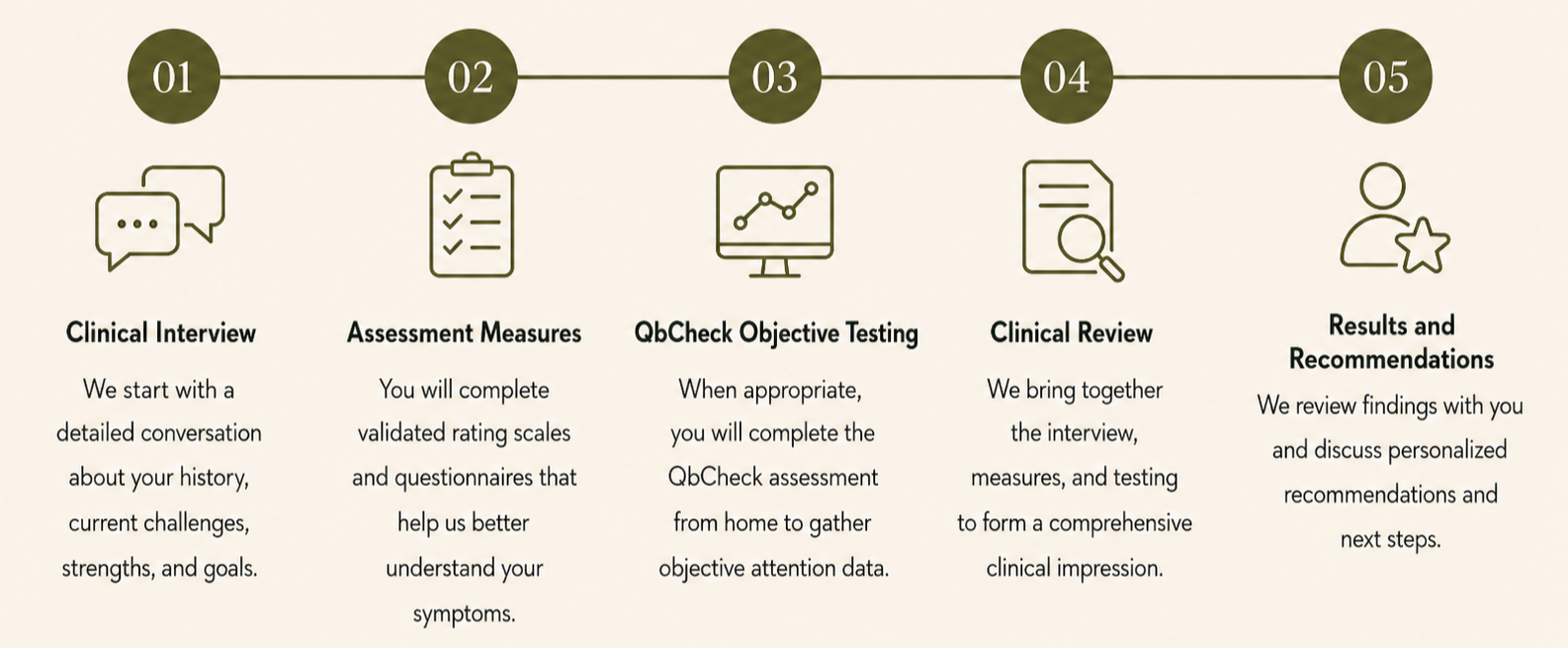
-
Your clinician will talk with you about your current concerns, symptoms, history, daily functioning, and other factors that may affect attention, organization, memory, or executive functioning
-
You will complete evidence-based rating scales and other measures selected to help evaluate ADHD symptoms and identify concerns that may need to be considered as part of the assessment.
-
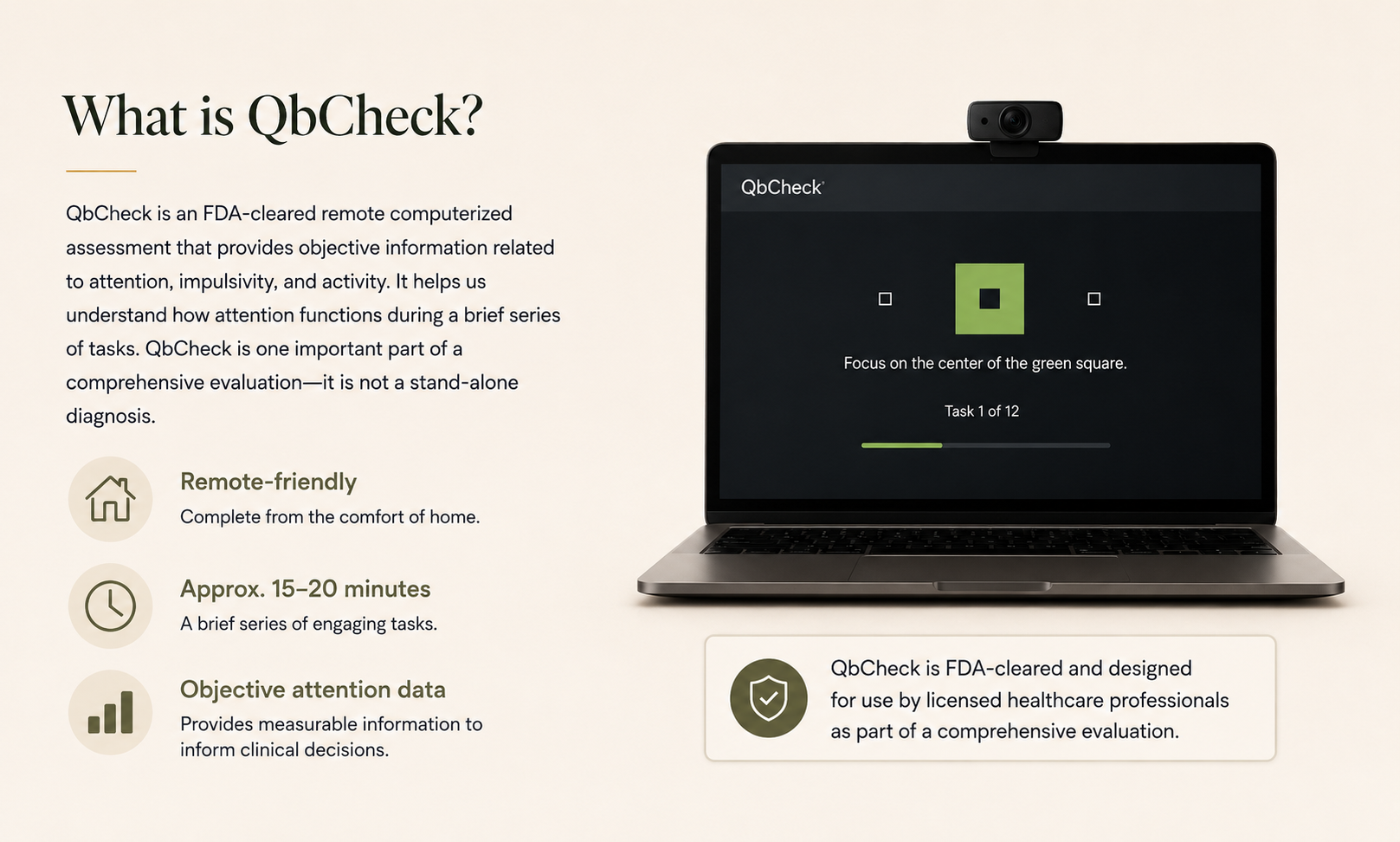
PBHA uses QbCheck, an FDA-cleared computerized ADHD assessment that can be completed remotely.
QbCheck provides objective information related to:
Attention
Impulsivity
Activity
The computerized portion generally takes approximately 15–20 minutes and is completed using a compatible computer and webcam.
QbCheck is one part of the evaluation, not a stand-alone diagnosis.
-
Your clinician reviews the information from your interview, assessment measures, QbCheck results, and other relevant clinical information together.
-
Your results are discussed with you so that you understand the clinical findings and recommendations for next steps.

Why We Use QbCheck
Most ADHD evaluations rely heavily on what a person remembers and reports about their symptoms. That information is important, but objective information can add another perspective.
QbCheck allows us to include computerized data related to attention, impulsivity, and activity as part of the broader evaluation.
The goal is not to let a computer decide whether you have ADHD.
The goal is to give your clinician more information to consider alongside your history, symptoms, functioning, clinical interview, and assessment measures.
You May Consider an ADHD Evaluation If...
You have ongoing concerns such as:
Difficulty staying focused or completing tasks
Frequently starting projects but struggling to finish them
Problems with organization or time management
Forgetfulness or frequently losing important items
Difficulty prioritizing responsibilities
Feeling mentally scattered or easily distracted
Chronic procrastination despite wanting to get things done
Difficulty managing work, school, household, or other responsibilities
A history of attention concerns that has never been formally evaluated
Questions about whether ADHD may be contributing to difficulties you are experiencing
Having one or more of these experiences does not automatically mean you have ADHD. A clinical evaluation helps determine whether ADHD or another concern may better explain what you are experiencing.

ADHD Symptoms Can Overlap With Other Concerns
One reason a comprehensive evaluation matters is that difficulty concentrating does not always mean ADHD.
Attention and executive functioning can also be affected by concerns such as anxiety, depression, chronic stress, sleep difficulties, and other behavioral health conditions.
Our evaluation process considers the broader clinical picture rather than beginning with the assumption that ADHD is the answer.